Introduction
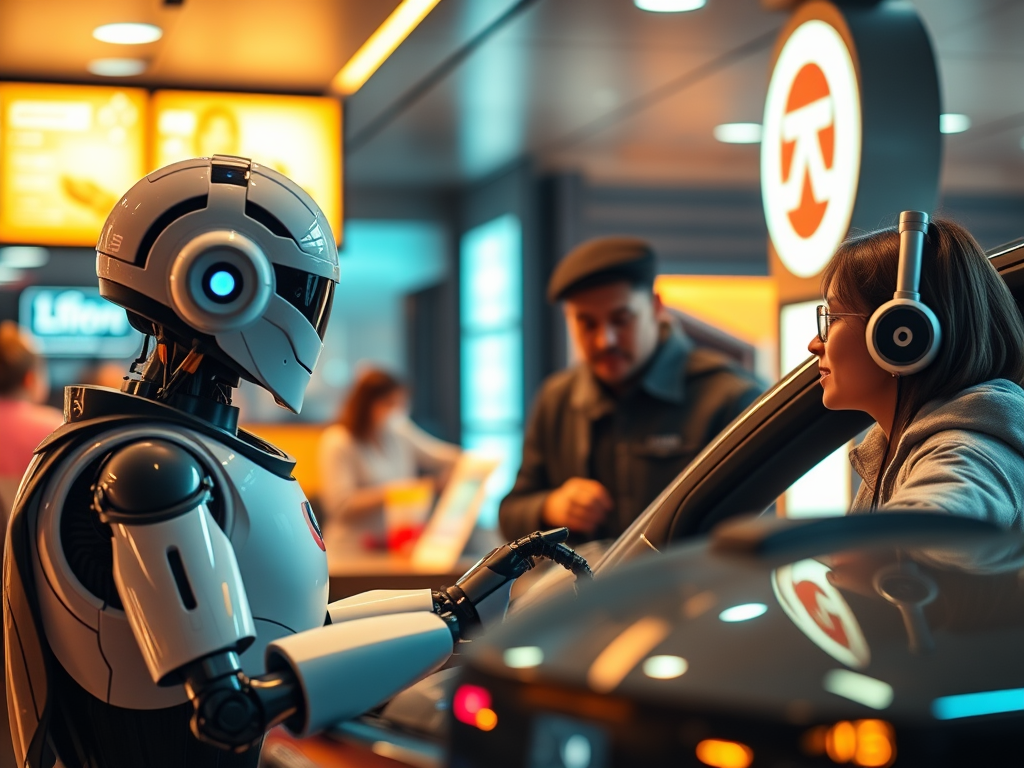
The food service industry is evolving rapidly, and artificial intelligence (AI) is at the heart of this transformation. From chatbots handling customer inquiries to voice assistants streamlining the ordering process, AI is revolutionizing how restaurants, food delivery services, and food retailers interact with customers. In this blog post, we’ll explore how AI-powered customer service tools are reshaping the food industry, improving efficiency, and enhancing customer experiences.
The Rise of AI in Customer Service
Customer expectations have changed significantly in recent years. People now expect instant responses, personalized service, and seamless interactions. AI technologies such as chatbots and voice assistants are meeting these demands by providing fast, accurate, and scalable customer support.
- Chatbots for Instant Customer Support
- AI-driven chatbots can handle inquiries 24/7, reducing the need for human intervention.
- They can answer common questions about menu items, delivery times, allergens, and promotions.
- Restaurants can integrate chatbots with platforms like Facebook Messenger, WhatsApp, or their own websites.
- Voice Assistants for Hands-Free Ordering
- Voice assistants like Alexa, Google Assistant, and Siri enable customers to place orders hands-free.
- Fast-food chains and coffee shops are incorporating voice AI into drive-thru systems for faster service.
- Customers can reorder their favorite meals simply by speaking a command.
- AI-Powered Personalization
- AI analyzes customer preferences and previous orders to offer personalized recommendations.
- Loyalty programs powered by AI can provide targeted discounts and exclusive offers.
- Dynamic pricing models can be used to optimize menu pricing based on demand and availability.
Case Studies: AI in Action
Several major food service brands are already leveraging AI-powered customer service tools:
- McDonald’s acquired an AI company to enhance its drive-thru voice recognition capabilities, improving speed and accuracy.
- Domino’s Pizza introduced an AI-powered chatbot, “Dom,” to take orders and track deliveries.
- Starbucks uses AI-driven voice ordering through its mobile app and drive-thru lanes.
- KFC is experimenting with facial recognition and AI-powered ordering kiosks in select locations.
Benefits of AI in Food Service Customer Support
- Speed and Efficiency – AI tools can process multiple customer inquiries simultaneously, reducing wait times.
- Cost Savings – Automating customer service reduces labor costs and improves operational efficiency.
- Improved Accuracy – AI-powered ordering minimizes human errors and ensures customers get exactly what they want.
- 24/7 Availability – AI chatbots provide customer support around the clock, ensuring customers always have assistance.
- Enhanced Customer Satisfaction – Personalized interactions and faster service lead to a better overall experience.
The Challenges of AI in Customer Service
Despite its advantages, AI implementation comes with challenges:
- Lack of Human Touch – Some customers prefer speaking with a human rather than an AI-driven assistant.
- Technical Limitations – AI still struggles with complex or highly specific customer inquiries.
- Integration Costs – Implementing AI systems requires an upfront investment that may not be feasible for all businesses.
The Future of AI in Food Service
AI in food service will continue to advance, with improvements in natural language processing (NLP) and machine learning making chatbots and voice assistants even more intuitive. In the coming years, we can expect:
- More sophisticated AI-driven self-service kiosks.
- AI-powered virtual waiters taking orders at dine-in restaurants.
- Seamless integration between AI tools and delivery platforms for optimized order tracking.
Conclusion
AI-powered customer service tools, such as chatbots and voice assistants, are transforming the food service industry by improving efficiency, reducing costs, and enhancing customer experiences. While challenges remain, the future of AI in food service looks promising, with even more innovative solutions on the horizon. Businesses that embrace these technologies today will be well-positioned to thrive in the evolving food industry.
Are you ready to implement AI in your food service business? Let’s discuss how technology can help you stay ahead of the competition!
AI in Business Analytics: How to Turn Data into Actionable Insights – John Wheeler
The Essential Marketing Strategies for Startups – John Wheeler
Leave a Reply