By John Wheeler
JohnWheeler.Blog
Sysco just made a ~$29 billion bet that the way restaurants buy food is changing — and that cash & carry is at the center of that shift. This isn’t a side move. It’s a signal that the traditional distributor model is evolving into something more flexible, more fragmented, and more competitive. If you’re a manufacturer, broker, or operator, this shift affects how products are sold, where they’re bought, and how performance is measured.
1.) Why do US Foods and Sysco own “Chef’s Stores”
The traditional foodservice distribution model has been built around large deliveries, scheduled routes, and contracted relationships. For decades, this worked well because restaurants tended to rely on a single primary distributor.
But that model is under pressure.
Costs have gone up. Labor is more expensive. Order patterns are less predictable. And many restaurants—especially independent operators—no longer want to be locked into large, inflexible orders.
This is where chef’s stores come in.
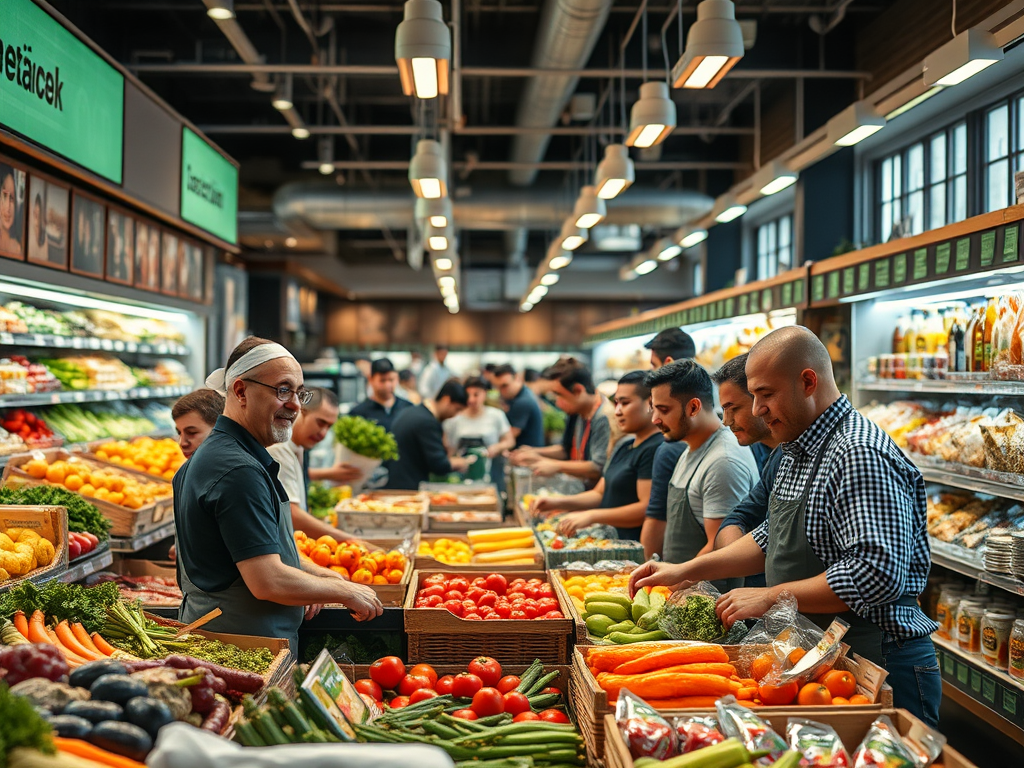
Chef’s stores (also called cash & carry or warehouse stores) allow operators to:
- Buy what they need, when they need it
- Avoid delivery minimums
- Pay lower prices in many cases
- Maintain tighter control over cash flow and inventory
Companies like US Foods and Sysco didn’t enter this space by accident. They saw that a growing portion of the market—especially smaller operators—was moving toward more flexible purchasing behavior.
Owning chef’s stores allows them to stay connected to those customers instead of losing that business to competitors.
1b) Who do they serve
Chef’s stores primarily serve a different segment than traditional distribution.
Their core customers include:
A. Independent restaurants and small chains B. Food trucks and pop-up concepts C. Bars, taverns, and brewpubs D. Caterers and small event operators E. Convenience-oriented buyers who need same-day product
These operators often:
- Don’t meet distributor minimums
- Need flexibility more than consistency
- Are highly price-sensitive
- Buy across multiple channels
This segment is large, fragmented, and growing—making it strategically important.
2.) What is Multi-Channel Sourcing and why are they shifting to it
Multi-channel sourcing means that a restaurant no longer buys from just one supplier.
Instead, they split their purchases across several channels:
A. Traditional distributors (for core items and delivery) B. Redistributors (for mixed loads and smaller quantities) C. Chef’s stores / cash & carry (for fill-in and price shopping) D. Retail and club stores (in some cases)
This shift is happening for several reasons:
A. Cost pressure — operators are constantly looking for better pricing B. Flexibility — smaller, more frequent purchases reduce risk C. Cash flow control — buying only what is needed helps manage cash D. Supply chain resilience — multiple sources reduce dependency on one supplier
The result is a more fragmented but more flexible system.
3.) How the big distributors are evolving
Large distributors like Sysco and US Foods are no longer just delivery companies.
They are evolving into multi-channel platforms.
Instead of relying only on trucks and routes, they are building ecosystems that include:
A. Delivery distribution (their core business) B. Cash & carry / chef’s stores C. Digital ordering and hybrid fulfillment models
This allows them to:
- Serve more types of customers
- Capture more total spend per customer
- Compete across multiple buying behaviors
The goal is simple: meet the customer wherever they choose to buy.
4.) How does Sysco’s purchase fit into this?
Sysco’s acquisition of Jetro / Restaurant Depot is a major move that fits directly into this strategy.
Before the acquisition, Sysco tested the model through its Sysco To Go locations. These stores acted as a proof of concept that customers wanted a cash & carry option from a trusted distributor.
The acquisition takes that idea and scales it nationally.
With this move, Sysco is:
A. Entering a large and growing cash & carry market B. Gaining access to hundreds of thousands of independent operators C. Capturing sales that might otherwise go to competitors D. Building a true multi-channel distribution platform
This is not just an expansion—it is a repositioning of the company.
5.) Why this deal is almost equal to Sysco’s entire valuation — and what that really means
One of the most striking aspects of this move is how it compares to Sysco’s overall market value.
Sysco’s market cap has been roughly in the $30–35 billion range. The Restaurant Depot (Jetro) acquisition is valued at approximately $29 billion.
That means Sysco is making an investment that is nearly equal to the entire value the stock market assigns to the company.
This is not typical.
Most acquisitions are small relative to a company’s size. This one is transformational.
What this tells us
A. The market views Sysco’s core business as stable but low growth
The traditional delivery model generates large revenue, but it is operationally heavy and margin-constrained. Investors do not assign it a high growth multiple.
B. Cash & carry is being valued as a higher-quality business
Restaurant Depot represents a faster-growing, higher-margin, and more flexible model. It serves a fragmented customer base that is difficult to reach through traditional delivery.
C. The value is not in current revenue mix — it is in future positioning
Even though chef’s stores may represent only ~16–17% of combined revenue, the strategic importance is much higher. This segment could drive a disproportionate share of future growth and profitability.
The key takeaway
Market cap is not a clean way to measure how much of Sysco is chef’s stores.
But it is a powerful way to understand the size of the bet.
Sysco is not making a small adjustment — it is repositioning the company around a multi-channel future where cash & carry plays a central role.
6.) The Hidden Challenge for Manufacturers and Brokers
The shift to multi-channel sourcing is changing how the entire system works — and most manufacturers and brokers are not fully prepared for it.
In the past, the model was simple. If you secured distribution and supported it with a broker, you had visibility into your business. Sales flowed through a known channel, and performance could be measured with reasonable accuracy.
That is no longer true.
Today, operators are buying across multiple channels — distributors, redistributors, chef’s stores, and even retail. As a result, manufacturers are losing visibility into where and how their products are actually moving.
This creates three major problems:
A. Hidden demand — Products may be selling through chef’s stores or secondary channels without the manufacturer knowing
B. Distorted performance — Distributor data no longer tells the full story
C. Weakened relationships — Loyalty shifts from contracts to convenience and price
For brokers, this creates both risk and opportunity.
Those who rely only on distributor relationships will lose influence. But those who understand how to operate across channels — and bring insight back to the manufacturer — become significantly more valuable.
The winners in this environment will be those who can:
A. See across all channels
B. Understand true product velocity
C. Identify gaps and opportunities in real time
This is where a Channel Intelligence System becomes essential.
Because in a fragmented, multi-channel world, the advantage no longer comes from controlling distribution — it comes from understanding it.
Final Thought
The foodservice industry is not moving away from chef’s stores.
It is moving toward a system where multiple channels work together.
The companies that win will not be those that dominate one channel, but those that can connect and optimize all of them.
That shift is already underway.
Author: John Wheeler
Brand: JohnWheeler.Blog
From Manufacturer to Menu: How AI Will Change Foodservice Decision-Making – John Wheeler
Leave a Reply